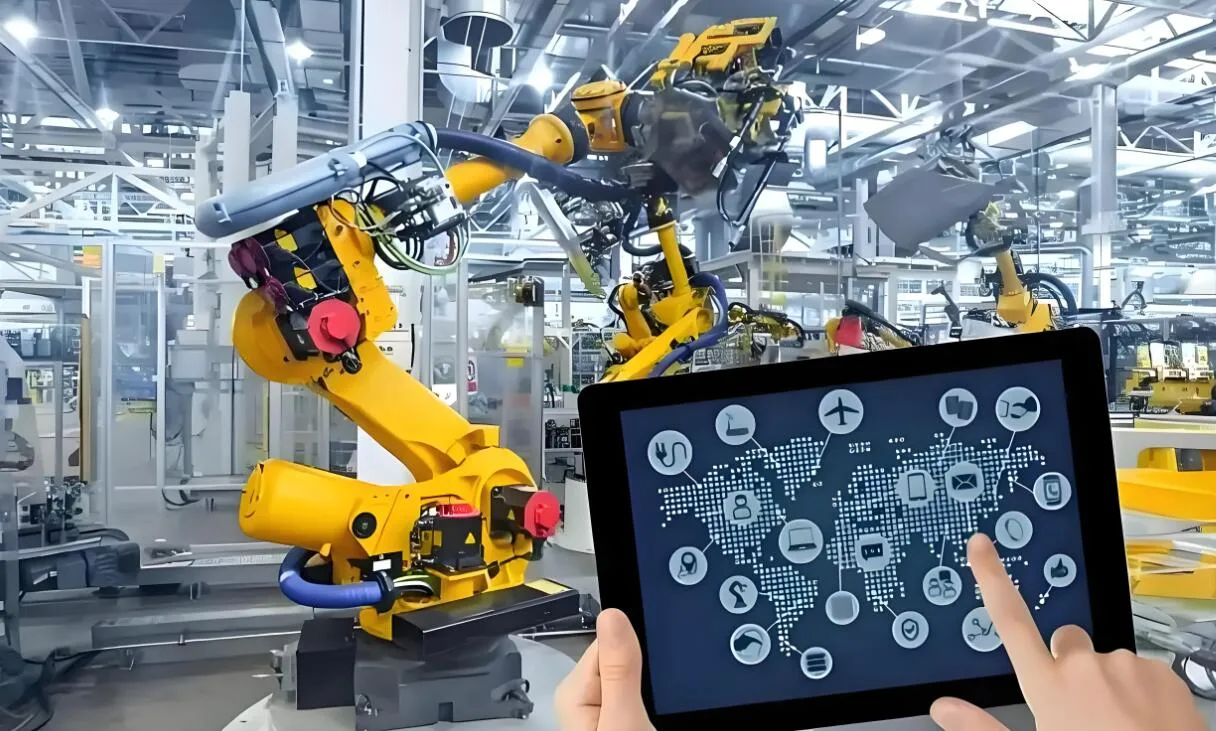
Smart Installation Systems leverage advanced technologies such as Artificial Intelligence (AI), robotics, Augmented Reality (AR), and the Internet of Things (IoT) to automate, semi-automate, or assist in the installation and commissioning of mechanical, electrical, and complex components within engineering, construction, and manufacturing sectors. Against the backdrop of continuously rising global labor costs, the aging workforce, and an increasing shortage of skilled tradespeople, Smart Installation Systems are rapidly emerging as a critical market solution to address labor demand and enhance project delivery efficiency.
📈 Market Size and Growth Forecast
The market for smart installation solutions is one of the fastest-growing segments within industrial automation and construction technology (ConTech).
Market Size: The market value for smart installation and assistance systems (including AR/VR guidance, automated positioning robots, and remote expert platforms) is growing rapidly, directly linked to the scale of global investments in Industry 4.0 and smart buildings.
Growth Forecast: The market is expected to sustain a very high Compound Annual Growth Rate (CAGR), with some reports predicting growth rates potentially exceeding 15%. This is driven by corporate demand for operational resilience and continuity, particularly the urgent need to reduce reliance on on-site manpower following disruptive global events.
Regional Distribution:
North America and Europe are the primary adopters and innovation hubs for smart installation technologies. The construction and manufacturing sectors in these regions have long faced high labor costs and generational skills gaps, leading to the strongest demand for technologies that boost output per worker.
The Asia-Pacific region, particularly China and Singapore, is rapidly investing in construction robots and automated assembly lines, guided by policy, to meet the massive peak labor demand of their large-scale infrastructure projects.
Core Market Drivers
The surge in the Smart Installation Systems market is mainly driven by the following key factors:
- Global Aging Workforce and Skilled Labor Shortages
Industries like construction, MEP installation, and high-precision manufacturing commonly face the challenge of senior tradespeople retiring while younger generations are reluctant to enter manual labor. Smart installation systems effectively fill both the skills and quantity gaps by augmenting existing workers or replacing repetitive labor. - Demand for High Efficiency and Zero-Error Installation
Complex projects (such as data centers and semiconductor fabs) require extremely high precision and minimal rework during the installation process. Smart systems (e e.g., laser-guided positioning, real-time quality inspection) can significantly enhance accuracy beyond human capacity, thereby reducing overall project costs and delivery timelines. - Impact of Disruptions on Supply Chains and On-Site Labor
Recent global events exposed the fragility of traditional labor-intensive installation models. Companies are now investing in remote guidance, digital twin pre-installation, and on-site robotics to ensure project continuity even under personnel restrictions.
Major Market Trends
Current major trends in the Smart Installation Systems market focus on human-machine collaboration and intelligent assistance:
Augmented Reality (AR) Assisted Installation: Using AR glasses or tablets to overlay digital information, installation steps, and 3D models in real-time for field technicians. This enables less-specialized workers to execute complex installation tasks efficiently, significantly reducing dependence on senior experts.
Autonomous Positioning and Grasping Robots: In large-scale or repetitive tasks, such as handling prefabricated modules, automatic bolt tightening, and preliminary pipe alignment, Mobile Robots (AGVs/AMRs) and cobots perform the heavy lifting and precise alignment, freeing up human workers for more complex decision-making tasks.
AI-Driven Diagnostics and Predictive Maintenance: Smart sensors and AI systems can monitor stress, vibration, and alignment deviations during the installation process in real-time, offering corrective guidance before errors occur, ensuring installation quality.
Digital Twin and Remote Expert Systems: Utilizing the Digital Twin for precise simulation before installation to avoid on-site clashes. During installation, the Digital Twin transmits real-time field data to remote experts, enabling efficient guidance and commissioning across geographical distances and time zones.
Challenges and Constraints
Despite the promising outlook, the adoption of Smart Installation Systems faces several challenges:
System Integration and Interoperability Issues: Smart installation systems often involve hardware (robots, sensors) and software (AR, AI) from multiple vendors. Ensuring seamless integration and data interoperability between these disparate components is a major technical hurdle.
High Initial Investment and ROI Cycle: The upfront cost of acquiring advanced robots, AR equipment, and developing customized AI software is high. Many Small and Medium Enterprises (SMEs) are still assessing the Return on Investment (ROI) across different projects.
Lack of Unified Standards and Safety Protocols: Operational safety, data privacy, and industry standards for automation and AR systems are not yet fully harmonized, which creates compliance and technical difficulties for large-scale or international deployment.
Worker Acceptance and Training Requirements: The rollout of smart systems requires comprehensive reskilling and retraining of the existing workforce. Some workers may harbor resistance or mistrust toward automation and robotics technology.
Conclusion
Smart Installation Systems represent an inevitable trend for addressing the global labor shortage and enhancing project quality. By combining the “intelligence” of AI, the “strength” of robotics, and the “enhancement” of AR, this market is fundamentally changing traditional installation workflows. Moving forward, companies that can provide highly integrated, user-friendly Human-Robot Collaboration solutions will play a pivotal role in propelling the engineering and construction industries to the next level of automation.