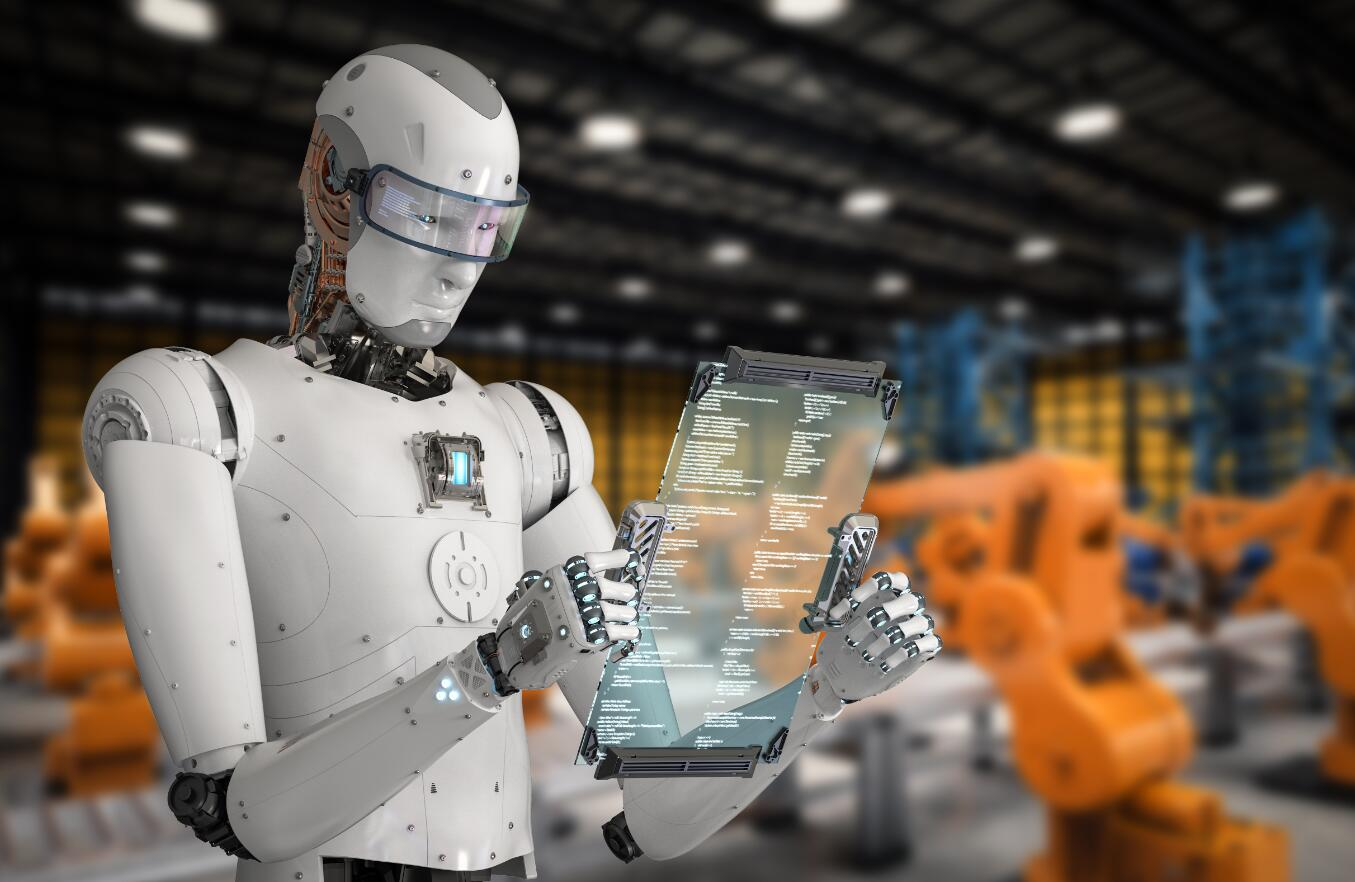
Artificial Intelligence (AI) refers to the capability of machines to mimic human intelligence, executing tasks such as learning, problem-solving, and decision-making. With rapid advancements in computing power, the accumulation of Big Data, and breakthroughs in algorithms like deep learning, AI is no longer a purely theoretical concept but is permeating every aspect of global industrial production, supply chains, operations, and business models. The development of AI is not merely a technological upgrade; it is the core driver pushing the industrial sector toward a revolution in efficiency, sustainability, and value creation.
📈 Market Size and Growth Forecast
The industrial AI market is a hotspot for technological investment, growing significantly faster than traditional industrial software and automation markets.
Market Size: The global industrial AI market, which focuses on applications such as predictive maintenance, machine vision, and process optimization, is already valued at tens of billions of US dollars.
Growth Forecast: The market is projected to maintain an exceptionally high Compound Annual Growth Rate (CAGR), with annual growth rates generally forecasted to be between 25% and 30% over the next five years. This exponential growth stems from the rapid maturation of AI technology and the industrial sector’s urgent need to boost productivity and reduce operational costs.
Regional Distribution:
North America and Europe lead in AI research and applications within high-value-added manufacturing (such as aerospace and pharmaceuticals), particularly focusing on AI for innovation in R&D and supply chain resilience.
The Asia-Pacific region is the largest market for industrial AI application, primarily due to its massive manufacturing base (especially China) and the large-scale deployment of AI-powered machine vision and process automation systems in the electronics, automotive, and heavy industries.
Emerging global economies are seeking leapfrog development by investing in AI-driven smart grids and resource management.
Core Drivers of Industrial AI Adoption
The widespread application and market growth of AI in the industrial sector are primarily driven by the following key factors:
- Exponential Data Growth and the Popularity of the Internet of Things (IoT)
The vast amounts of data generated by industrial equipment (such as sensors, robots, and CNC machines) are the foundation for training and optimizing AI models. The proliferation of the Industrial Internet of Things (IIoT) enables real-time data collection, transmission, and analysis, paving the way for the deep application of AI in production processes. - Urgent Need for Improved Operational Efficiency and Cost Reduction
Facing global competition and margin pressure, companies need to minimize downtime, optimize energy consumption, and increase raw material utilization. AI-driven Predictive Maintenance (PdM) and process optimization can significantly reduce both operating expenditure (OpEx) and capital expenditure (CapEx). - Enabling Complex Decision-Making and Customized Production
Modern manufacturing demands higher product customization and faster time-to-market. AI can process massive variables and constraints to quickly make optimal decisions in complex production scheduling, quality control, and supply chain management—a capability beyond traditional algorithms.
Major Industrial AI Application Trends
Current major application trends of AI in the industrial sector focus on intelligence, autonomy, and optimization:
Predictive Maintenance (PdM): AI models analyze sensor data (e.g., vibration, temperature, current) to predict the precise time of equipment failure, enabling maintenance activities to be planned proactively and reducing unexpected downtime by up to 50%.
Machine Vision and Quality Control: Using deep learning algorithms (such as Convolutional Neural Networks/CNNs) for high-speed, high-accuracy defect detection and quality grading of products. AI vision systems can spot minuscule flaws invisible to the human eye, significantly boosting product yield rates.
Automated Process Control and Optimization: AI is used to optimize the use of energy and materials. For example, in chemical, cement, or steel production, AI adjusts process parameters in real-time to ensure optimal output and minimal energy consumption.
Supply Chain Resilience and Demand Forecasting: AI analyzes external data such as market trends, weather, and geopolitical events to provide more accurate demand forecasts and optimize logistics and inventory management, thereby strengthening the supply chain’s resilience against disruptions.
Generative AI in Engineering Design: Generative AI is beginning to assist engineers with product design and topology optimization, such as automatically generating thousands of design iterations based on performance requirements.
Challenges and Constraints
Despite AI’s immense potential, its industrial deployment still faces challenges:
Data Quality and Silo Issues: Many legacy industrial systems suffer from non-standardized data formats, poor quality, or data stored in silos, which limits the training and generalization ability of AI models.
AI Model Reliability and Explainability: In high-risk industrial environments, decision-makers must trust AI recommendations. However, many complex deep learning models lack explainability, making them difficult to fully adopt in safety-critical applications.
Skills Gap and Talent Competition: The industrial sector lacks “bilingual” talent proficient in both domain knowledge (e.g., mechanical engineering, chemistry) and AI technology, limiting the speed of AI solution development and deployment.
High Integration and Retrofitting Costs: Integrating AI systems into older Legacy Systems often requires significant customized development and hardware modification, leading to high upfront investment costs.
Conclusion
Artificial Intelligence is the transformative force propelling global industry into the era of “super-efficiency.” It is fundamentally altering the operational models of sectors like manufacturing, energy, and logistics, making them smarter, more efficient, and more sustainable. Moving forward, the enterprises that successfully achieve AI-driven transformation will be those that not only invest in the technology itself but also focus on resolving data quality, building trust, and bridging the talent gap.